This comprehensive article explores the fascinating world of sapphires, detailing their geological genesis, the legendary high-altitude mines of Kashmir, the historic river gravels of Sri Lanka, and their exceptional technical durability, offering deep insights into what makes these precious corundum stones universally treasured.
Geological Genesis: Earth's Ancient Tapestry
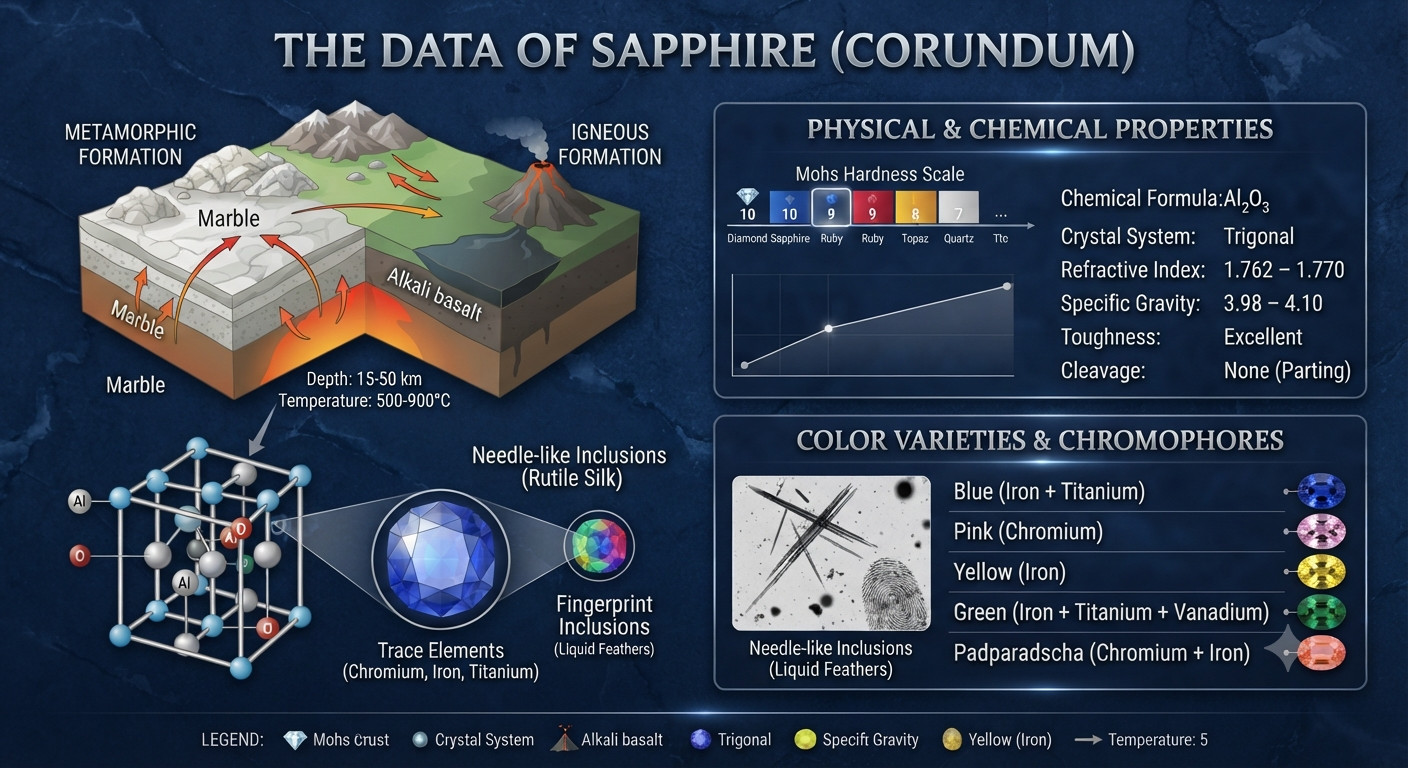
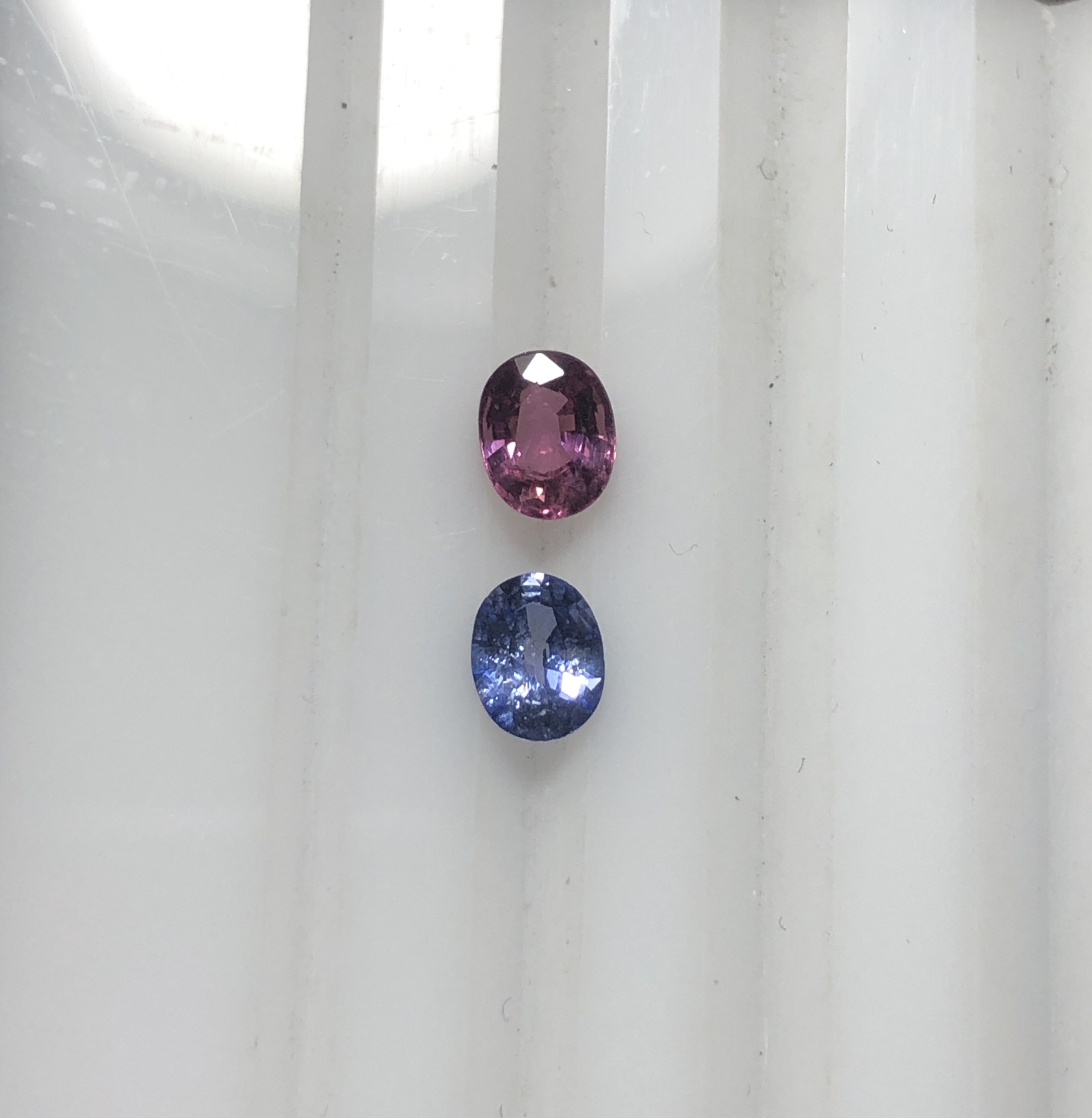
When you hold a truly fine sapphire in your hand, you are holding a fragment of deep-earth history that took tens of millions of years to write. Long before humans walked the earth, monumental tectonic collisions, intense subterranean heat, and slow-cooling magmatic cookers were quietly at work deep beneath the crust, orchestrating a masterclass in mineralogy. At its core, a sapphire is simply a crystallized form of aluminum oxide, scientifically known as corundum. Pure corundum is completely colorless, a blank canvas of crystal clear mineral matter. But nature, in all her chaotic brilliance, rarely leaves a canvas blank. As these subterranean fluids and molten rocks migrated through the Earth's crust, infinitesimal traces of foreign elements slipped into the growing crystal lattice. A whisper of iron and titanium here creates the iconic, deep ocean blue that defines the stone in the popular imagination. Introduce a touch of chromium, and the stone flushes with a vibrant, electric pink or a fiery ruby red (though gemological convention reserves the name ruby strictly for the red variety). Shift the balance of iron alone, and you enter the warm, buttery domain of yellow and golden sapphires. Other trace elements conjure up greens, violets, and the moody, enigmatic tones of parti-colored stones that show shifting bands of color depending on how the light strikes them. What makes this geological genesis even more fascinating is the variety of environments where it happens. Some sapphires form in metamorphic marbles, where aluminum-rich sedimentary rocks baked under immense pressure shed their impurities, allowing pristine, glowing crystals to grow within the marble matrix. Others form in alkali basalts, pushed up rapidly from the mantle during ancient volcanic eruptions, carrying with them dark, intense blues and greens. This wide range of origins means that no two sapphire deposits on Earth share the exact same fingerprint. Every single stone carries microscopic inclusions—tiny liquid feathers, crystals of zircon, or silky rutile needles—that tell the specific geological story of where it was born, making it completely unique in the universe.
Legends of the Peaks: The Kashmir Legacy
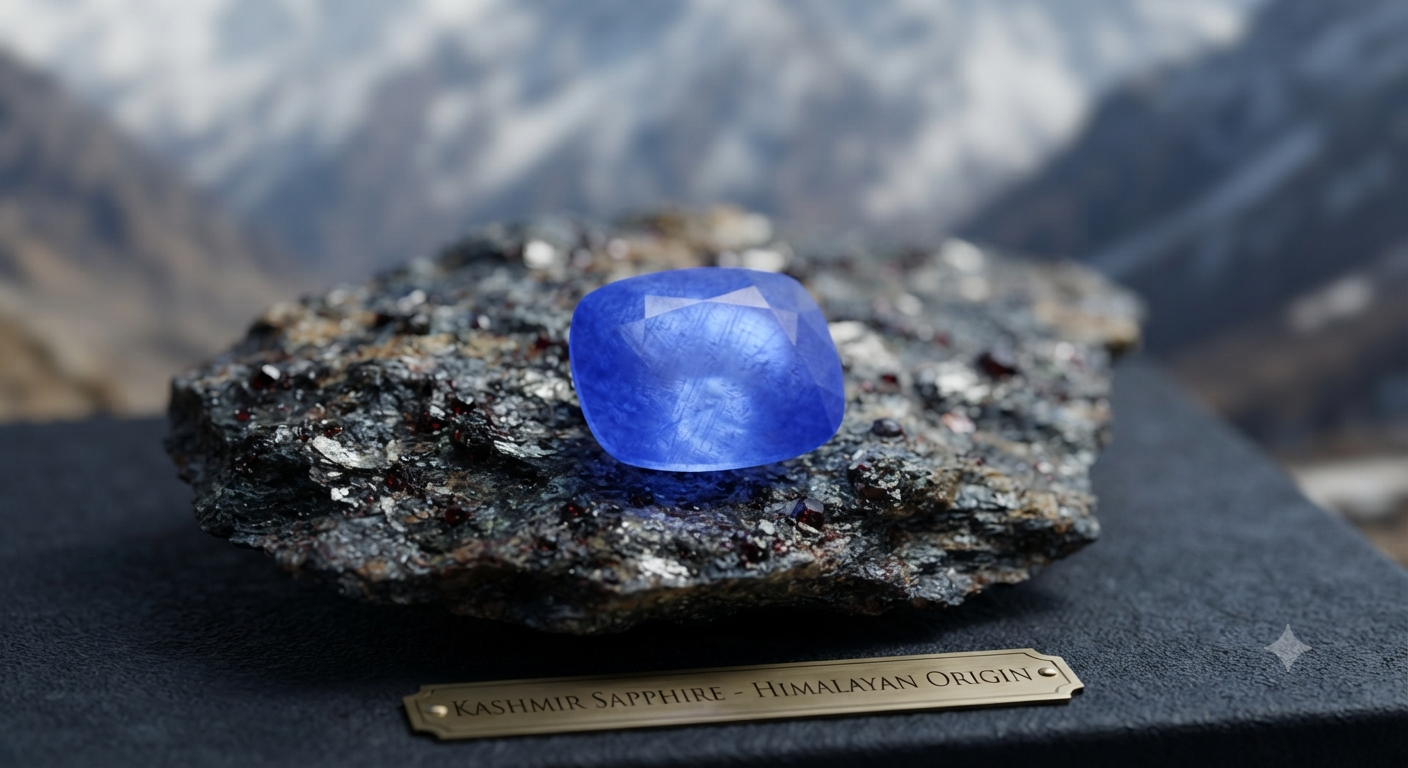
If the broader world of sapphire is an epic novel, the chapter on Kashmir is its most breathtaking, tragic, and romantic stanza. High up in the remote, snow-scoured peaks of the northwestern Himalayas, nestled within the towering Pir Panjal range at an altitude of over 4,500 meters, lies a legendary mining district that changed the gemstone world forever. Discovered or dramatically exposed around 1881 following a massive landslide, the original Kashmir mines—often referred to by old-timers as the "Old Mine" or Padparadscha-associated deposits—unveiled stones of such staggering beauty that they instantly captured the obsession of global royalty and elite collectors. The defining characteristic of a true Kashmir sapphire is its legendary "velvety" or "cashmere silk" appearance. Unlike standard blue sapphires that can sometimes look dark, inky, or glassy, Kashmir stones possess a soft, internal glow. This optical phenomenon is caused by microscopic, densely packed inclusions of rutile needles that scatter light in all directions, diffusing the blue color across the entire crystal. The result is a rich, cornflower blue that looks like crushed velvet, maintaining its vibrant, saturated hue under candlelight, daylight, or harsh fluorescent office lamps alike. It is a warm, breathing blue that feels almost alive. Yet, the story of Kashmir sapphire mining is remarkably brief. The primary high-yield period lasted barely a decade, from roughly 1882 to 1887, before the accessible pockets of gem-bearing rock were exhausted or buried beneath glacial ice and administrative crackdowns by the Maharaja of Jammu and Kashmir. Subsequent attempts to systematically mine the high-altitude deposits proved perilous, expensive, and largely fruitless due to the extreme weather, short working windows, and hostile terrain. Today, genuine, untreated Kashmir sapphires are exceptionally rare museum pieces. They rarely circulate in the open commercial market; instead, they pass quietly through elite auction houses like Christie's and Sotheby's, where historical provenance, scarcity, and that signature velvety glow command jaw-dropping prices per carat. Owning one is not merely about possessing a rare mineral; it is about holding a physical piece of a lost world that can never, under any modern circumstances, be replicated.
The Gem Gravels of Sri Lanka (Ceylon)
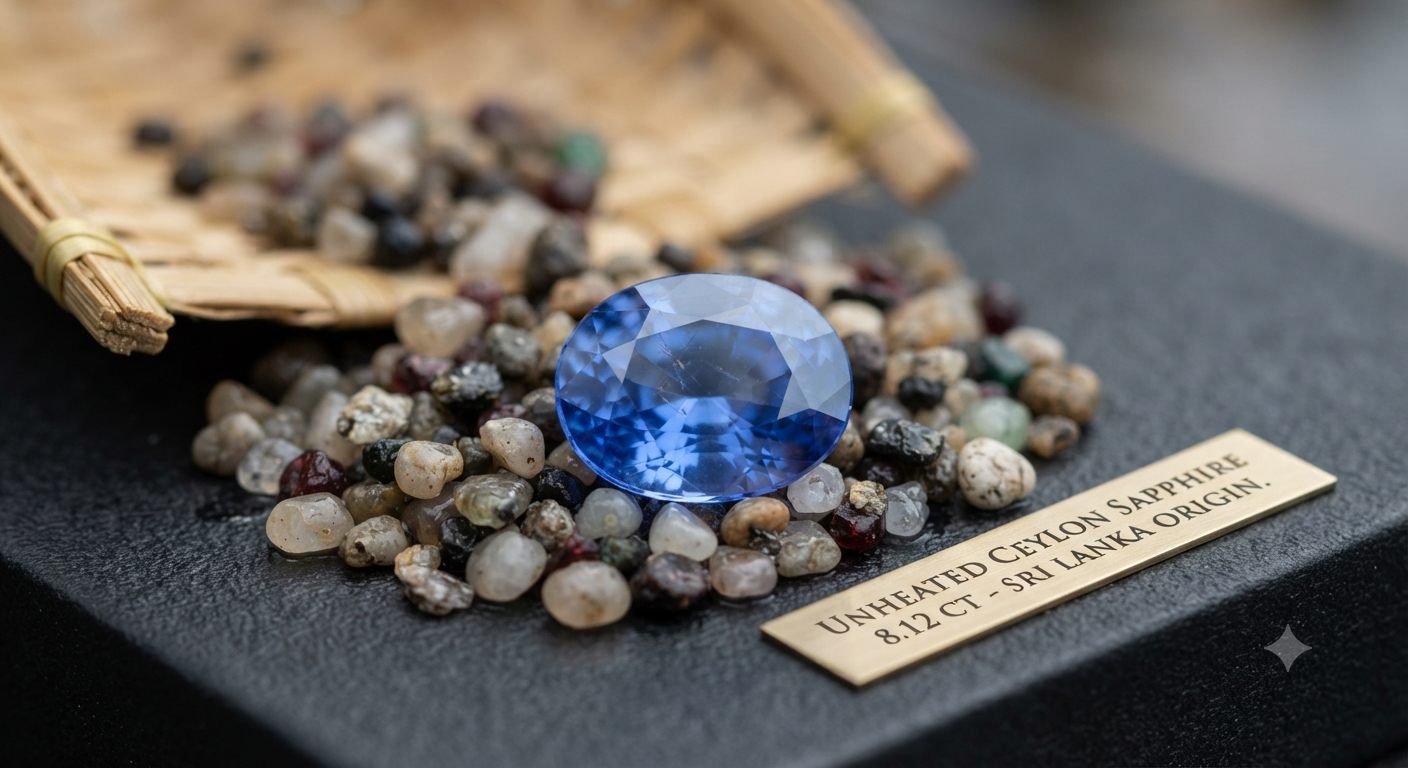
While the high peaks of the Himalayas gave us fleeting, dramatic flashes of rare history, the sun-drenched island of Sri Lanka—historically known to the ancient world as Taprobane and to Arab traders as Serendib—offers a continuous, millennia-old romance with sapphire. For over 2,500 years, Sri Lanka has been one of the most prolific and reliable sources of fine gemstones on the planet. Long before European explorers mapped the trade routes, Persian, Greek, and Roman merchants were sailing to the shores of Ceylon to trade for its legendary blue, yellow, pink, and star sapphires. The secret to Sri Lanka's enduring gem wealth lies in its unique geology and topography. The island's central mountain massifs are composed of ancient Precambrian Highland Complex rocks that have been weathered and eroded by tropical monsoons for millions of years. As the mountains wear down, heavy mineral-bearing crystals are washed away by rushing rivers and streams, carrying them down valleys to settle in deep alluvial deposits known locally as illam. These gem gravels rest beneath layers of clay, sand, and soil in the lowland valleys, particularly around the famous gemstone hub of Ratnapura, which literally translates to "City of Gems." Mining in Sri Lanka remains a remarkable testament to traditional, sustainable, and artisanal craftsmanship. Rather than deploying massive strip-mining machinery that tears up the landscape, traditional Sri Lankan miners often sink manual shafts into the earth, shoring up the walls with wooden poles and woven palm fronds. They bring the heavy, gravelly illam to the surface by hand and wash it in circular wicker baskets at nearby streams, swirling the slurry until the heavier stones settle to the center. The sapphires recovered from these gravels—famously known in the trade as "Ceylon sapphires"—are universally celebrated for their high brilliance and bright, lively, open tones. Unlike basaltic stones that can run heavy and dark, Ceylon blues tend to be vivid, pastel-to-medium-deep, and intensely luminous. Sri Lanka is also the exclusive home of the mesmerizing Padparadscha sapphire—a rare, delicate fusion of pink and orange reminiscent of a tropical lotus blossom at sunset. Through generations of quiet expertise in sorting, cutting, and traditional heat treatment, Sri Lankan artisans have mastered the art of bringing out the absolute best in these river-born treasures, bridging ancient heritage with modern global demand.
Technical Specifications and Durability
Beyond romance, history, and color, sapphire earns its supreme reputation among gemologists and jewelry designers through unyielding physical and chemical resilience. Ranking 9 on the Mohs scale of mineral hardness, sapphire is second only to diamond, which sits at the absolute pinnacle at 10. Because the Mohs scale is logarithmic rather than linear, diamond is significantly harder than sapphire, but sapphire's toughness and lack of clear cleavage planes make it remarkably resistant to chipping, shattering, and daily wear and tear. This makes it the ultimate choice for heirloom-quality jewelry, capable of surviving decades of active, everyday use without losing its polish or structural integrity. Chemically, sapphire is corundum, sharing its exact mineral family with ruby. Its crystal structure is trigonal, growing most commonly in barrel-shaped hexagonal prisms or bipyramidal crystals. This specific atomic packing gives the stone a high refractive index and impressive double refraction, which contributes directly to its signature internal fire and brilliance when precision-cut by a skilled lapidary. Gemstone Property Technical Specification Mineral Family Corundum ($Al_2O_3$)Mohs Hardness9 (Superior scratch resistance)Refractive Index1.762 – 1.770Crystal System Trigonal Primary ChromophoresIron ($Fe$), Titanium ($Ti$), Chromium ($Cr$)
Questions Readers Often Ask
What scientific name and chemical composition define a sapphire?
A sapphire is scientifically classified as corundum, which is a crystallized form of aluminum oxide ($Al_2O_3$). In its purest state, it is completely colorless, but the presence of trace elements like iron, titanium, and chromium gives it its diverse range of colors.
What distinctive visual characteristic makes genuine Kashmir sapphires so highly prized by collectors?
Genuine Kashmir sapphires are renowned for their iconic "velvety" or "cashmere silk" appearance. This soft, glowing effect is created by microscopic, densely packed rutile needle inclusions that diffuse the light across the stone, producing a rich cornflower blue that maintains its saturation in any lighting condition.
Why are Sri Lankan (Ceylon) sapphires traditionally celebrated in the global gem market
Ceylon sapphires are celebrated for their high brilliance, luminosity, and bright, open tones rather than dark, inky colors. Furthermore, Sri Lanka is famous for its sustainable artisanal river-gravel mining (illam) and for being the exclusive geographic origin of the rare Padparadscha sapphire.
Featured Products
Interested in our gemstones?
View Our Collection →